

Introduction

Desa Bobos is a village located in Kecamatan Dukupuntang, Kabupaten Cirebon, West Java, Indonesia. Situated in the western part of Cirebon Regency, the village shares a direct border with Kabupaten Majalengka. Although it may not be widely recognized as a tourist destination, Desa Bobos has several characteristics worth exploring, particularly its natural stone industry, local traditions, and geographical surroundings.
A field observation was conducted on October 26, 2026, at the Desa Bobos Village Hall. During the visit, information was collected through interviews with two local sources, Pak Ilham and Pak Udin. The observation focused on identifying the village's characteristics, economic activities, cultural practices, language, and opportunities for tourism development.
The findings reveal that Desa Bobos has a strong connection between its local economy and natural resources. At the same time, its community traditions and geographical features provide additional aspects that contribute to the village's identity.
Geographical Conditions and Village Characteristics
Desa Bobos is located approximately 9–10 kilometers west of Sumber, the capital of Cirebon Regency. According to the village profile information recorded in the observation instrument, the village covers approximately 92 hectares and has a population of around 4,850 people. Its geographical position is particularly interesting because it borders the Majalengka area. The neighboring areas include Desa Dukupuntang to the north, Desa Cikalahang to the east and south, and Desa Cipanas to the west.

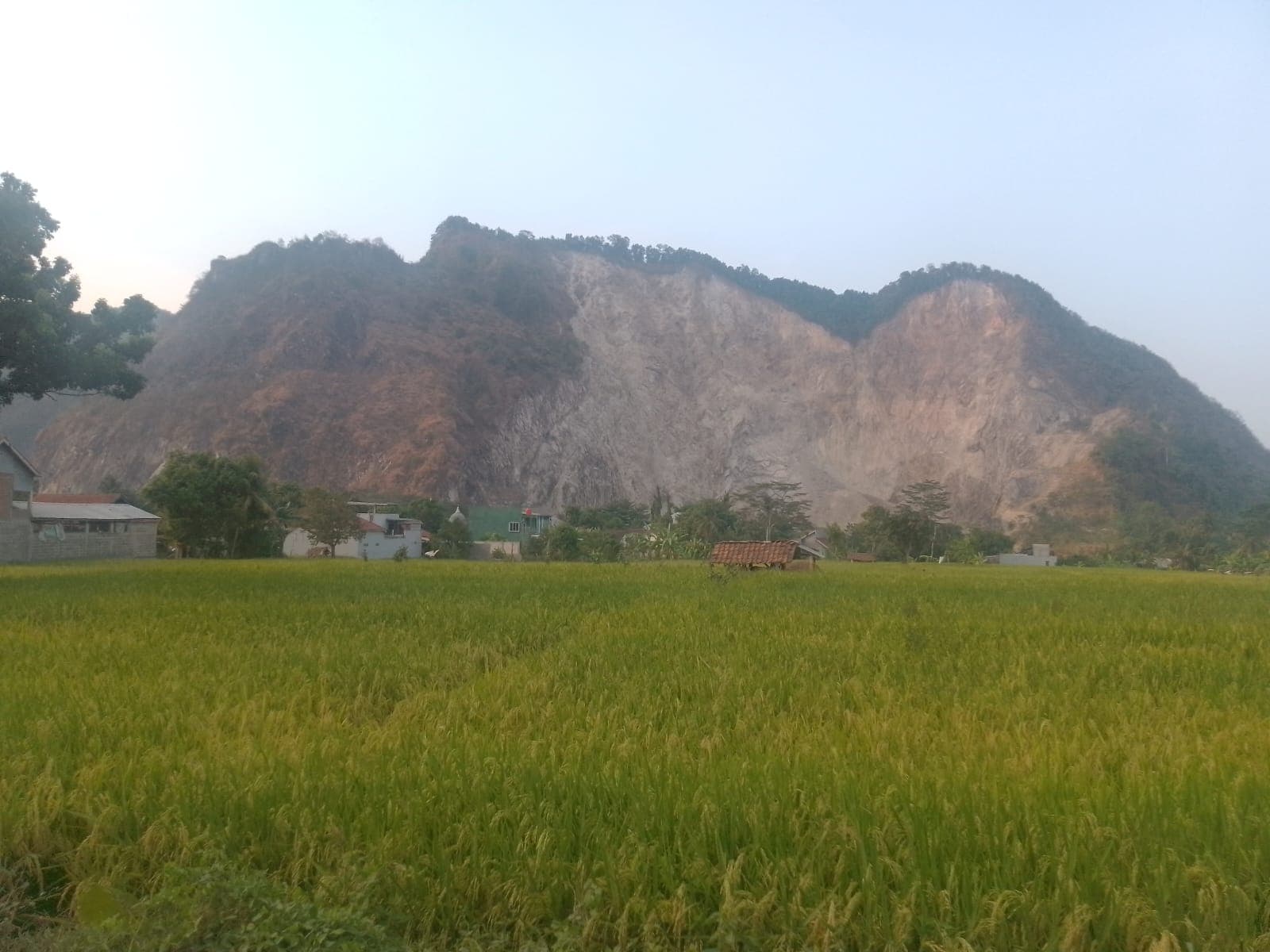
This geographical condition is also reflected in the language used by the community. Based on interviews with Pak Ilham and Pak Udin, residents predominantly use Sundanese in their everyday communication. According to the sources, this is related to the village's location near the border of Majalengka. Another geographical feature associated with the area is Gunung Kuda, a limestone mountain that can be accessed through Desa Bobos. Although it administratively belongs to Desa Cipanas, the access route through Bobos makes it relevant to the village's geographical and tourism profile.

Natural Stone Craftsmanship and Local Economic Activities
One of the most distinctive characteristics of Desa Bobos is its natural stone industry. Based on information obtained from Pak Ilham and Pak Udin, many residents work as natural stone craftsmen or employees in stone-processing factories. According to the field observation, it is estimated that nearly 50% of the local population is involved in these activities. The industry produces various products, including statues, decorative ornaments, calligraphy, gravestones, and other items made from natural stone.

These products demonstrate the skills and creativity of local workers in transforming natural materials into valuable objects. The industry also provides employment opportunities and supports the livelihoods of many families.

However, the development of this industry also requires attention to environmental conditions. One concern identified during the village observation was the disposal of stone-processing waste. Some factories were reported to dispose of waste carelessly, potentially affecting nearby agricultural land and rivers. Although some factories have installed filtration systems, responsible waste management remains important for the sustainability of the village.

Considering the importance of this industry, Desa Bobos has an opportunity to develop its craftsmanship beyond ordinary production activities. One possible idea is to establish a natural stone craft park. This place could function as an exhibition center, an educational area where visitors learn about stone processing, and a marketplace for products made by local craftsmen.
Such development could introduce the skills of the community to a wider audience while creating additional economic opportunities.
Local Traditions and Cultural Activities
Besides its economic activities, Desa Bobos also maintains traditions that contribute to its social and cultural identity. According to Pak Udin, two community activities that remain part of village life are Ruwahan and Wayang Kulit performances.
Ruwahan is a community tradition involving collective prayers and remembrance for deceased family members and respected elders. This activity is generally organized during the month of Syaban, also associated locally with the Ruwah period. It reflects religious practices and respect for those who have passed away.

Another cultural activity is Wayang Kulit, a traditional Indonesian shadow puppet performance. According to the interview information, the performance is organized during the specific Syaban/Ruwah period. Besides providing traditional entertainment, it also creates an opportunity for residents to gather and strengthen relationships.
These activities demonstrate that cultural heritage is not limited to historical buildings or physical objects. It can also be found in traditions, religious practices, and community activities that continue to be maintained by local residents.
Local Oral History and the Origin of the Village Name
An interesting part of the observation was the oral story concerning the possible origin of the name Desa Bobos.
According to Pak Udin, the story is connected to a conflict between the Kingdom of Cirebon and the Kingdom of Galuh Majalengka. In the story, horses belonging to the Galuh forces reportedly became stuck around the area of Gunung Kuda while they were advancing toward Cirebon.
The incident was described using the local expression "ti jeblos," referring to something becoming stuck or falling into a hole. According to this oral account, the word "jeblos" may have a connection with the origin of the name Bobos.
Although this story has not been verified through historical documents, it remains an interesting example of local knowledge preserved through oral storytelling. It also provides an opportunity to document stories shared by residents before they become less familiar to younger generations.
Tourism Potential and Cultural Preservation
Desa Bobos has several elements that could support future tourism development. One of them is Bukit Lumpang, a tourism attraction located within Desa Bobos itself. Together with the surrounding natural landscape and access to Gunung Kuda, it provides an opportunity to introduce the village to visitors interested in exploring local destinations.


The natural stone industry could also become part of the tourism experience. Visitors could learn about the production process, observe the skills of local craftsmen, and discover the different products created by the community. Meanwhile, cultural activities such as Ruwahan and Wayang Kulit represent important aspects of local heritage that deserve documentation and preservation.

Nevertheless, tourism development requires proper preparation. Information about attractions, visitor facilities, environmental management, and destination organization needs further attention. Local residents, craftsmen, and village authorities should be involved so that tourism activities can provide benefits to the community. It is also important to ensure that tourism development does not damage the environment or change the original meaning of local traditions simply to attract visitors.
Conclusion
The field observation in Desa Bobos reveals a village with distinctive economic, cultural, and geographical characteristics. Its natural stone industry provides employment opportunities and represents the skills of local craftsmen. Meanwhile, traditions such as Ruwahan and Wayang Kulit demonstrate the importance of religious practices and community relationships.
The village also has interesting local knowledge through its oral story about the possible origin of its name, as well as geographical attractions such as Bukit Lumpang and access to Gunung Kuda.
Although Desa Bobos still has challenges in environmental management and tourism organization, its existing resources provide opportunities for future development. By documenting local traditions, supporting natural stone craftsmen, improving environmental practices, and involving the community in tourism planning, Desa Bobos can preserve its identity while introducing its characteristics to a wider audience.
Ultimately, the value of Desa Bobos lies not only in its natural resources but also in the people, traditions, skills, and stories that make the village unique.
References
- Field observation conducted at Desa Bobos, Kecamatan Dukupuntang, Kabupaten Cirebon, October 26, 2026.
- Interview with Pak Ilham, local source, Desa Bobos, October 26, 2026.
- Interview with Pak Udin, local resident, Desa Bobos, October 26, 2026.
- Instrumen Observasi Lapangan: Cirebon Cultural Profile and Tourism, 2026.
- Cirebon Cultural Profile and Tourism, village and regional profile reference document
Written by Muhammad Ridhwan Fachrurrozi
Sources
Field observation instrument in Bobos Village, Dukupuntang, Cirebon, October 26, 2026.

