

Introduction
Wanacala Village is one of the areas located in Harjamukti Subdistrict, Cirebon City, that still maintains various ancestral traditions. These traditions are not only a part of the community's life but also reflect the connection between history, beliefs, togetherness, and local cultural identity. One location that plays an important role in carrying out these traditions is the Sacred Tomb of Prince Suryanegara.

Through field observations conducted on October 25, 29, 30, and November 6, 2026, as well as interviews with community leaders and local residents, several traditions were found to still be known and practiced by the people of Wanacala. These traditions include Ngunjung Buyut, Sedekah Bumi, and Gaman. Each has different activities and meanings but equally shows the community's effort in maintaining their connection with ancestral heritage.
Ngunjung buyut: A Tradition of Respecting Ancestors

One of the traditions that the Wanacala community still maintains is Ngunjung Buyut. This tradition is held every year in October at the Sacred Tomb of Prince Suryanegara. The event lasts for two days, Thursday and Friday, and is usually held on the night of Friday Kliwon. The date is determined according to the calendar used by the local community.
Based on an interview with Mr. R. Lili Alida Sumamenggala, the caretaker of the tomb, the word 'ngunjung' means 'to visit.' Therefore, Ngunjung Buyut can be understood as an activity of visiting ancestors’ graves as a form of respect and to remember the contributions of those who came before. This tradition has been passed down from generation to generation and is still practiced by the community today.
During the Ngunjung Buyut event, several activities were carried out. The community prepared various necessities for the event, then they performed tawasul and tahlil as part of a joint prayer activity. In addition, there was also a Mask Dance performance, which is one of the artistic elements in the series of activities. The presence of these religious and artistic activities shows that this tradition has both spiritual and cultural elements.

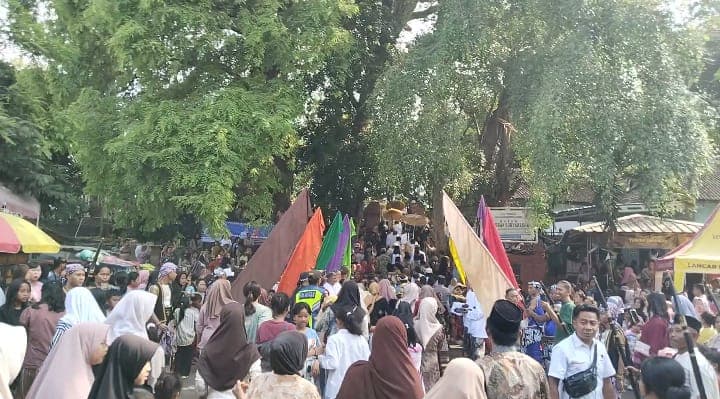
On Friday, the Ngunjung Buyut series was also enlivened with a troop parade activity that served as a welcome for the group from Lemah Tambah. Based on direct observation, this activity showed a welcoming procession with the royal troops lined up in the field.

According to the kuncen's explanation, the procession also involved Mask dancers, Cultural dance performers, and cucuk lampah. This activity became one of the interesting parts of the Ngunjung Buyut series because it showcased elements of tradition, art, and respect for visiting guests.
For the people of Wanacala, Ngunjung Buyut is not just an annual event. This tradition is an opportunity to remember their ancestors, preserve inherited customs, and bring the community together in shared activities.
Sedekah Bumi: The Form of Community Togetherness

Besides Ngunjung Buyut, the people of Wanacala also know the tradition of Sedekah Bumi. This tradition is usually held about a week after Ngunjung Buyut. One of its main features is the involvement of residents in preparing food from their own homes.
Each family prepares rice packets with different side dishes according to their preference and ability. After Friday prayers, residents bring the food to a collection point around the Suryanegara Prince's Tomb. Once all the food is gathered, the community holds a joint prayer. Then, the food is distributed back to the people.
Based on the author's experience as a local resident who participates in this tradition, the activity gives the community a chance to share with each other. Each family can join by bringing food, and then receive back food that has been collected. In practice, someone can get a few packs of rice from the distribution.
Sedekah Bumi shows the values of togetherness and social care that the community still maintains. This tradition also shows that preserving culture doesn't always have to be through big ceremonies, but can be realized through simple activities that involve many people.
Gaman Tradition: Inherited Ancestral Heritage
Another tradition known by the Wanacala community is Gaman. Gaman is an heirloom passed down from ancestors through generations. This tradition can be carried out on the night of 1 Suro, but it doesn't have a fixed schedule. According to the local people, it can also be performed when the heirloom makes a certain sound. That sound is believed to be a sign that the Gaman tradition needs to be carried out.
In its practice, people prepare coconut rice along with side dishes like omelets and vermicelli. The heirloom is then carried around the village and stops at several places considered to have special meaning. According to the locals, each stop begins with the call to prayer (azan), followed by a series of activities according to the beliefs passed down by the ancestors.
After the entire journey is completed, the heirloom is brought back to the Prince Suryanegara's Tomb area. The community then holds a group prayer and distributes nasi uduk to the people who take part in the tradition. For some locals, the Gaman tradition is believed to be a way to ward off misfortune, essentially asking for protection and safety.
Stories about Gaman are also passed down through the stories told by the elders in the area. However, various beliefs related to heirlooms are part of the community's stories and beliefs, so they need to be understood as local oral traditions. As someone living near where the heirlooms are kept, I got to know this tradition through the surrounding environment and by taking part in community activities.
Historical Remains and Cultural Characteristics

Besides the ongoing traditions, the Pangeran Suryanegara Sacred Cemetery area also has several physical relics that are interesting to notice. In the area, there are ancient tombstones located in Cemetery 9 and Cemetery 13, as well as some large bricks that are part of the historical remains at the site.

According to R. Lili Alida Sumamenggala, the caretaker, the bricks were once examined by archaeologists and are estimated to date back to the 1800s. This information shows that the cemetery area has physical relics that hold historical value.
In everyday life, the people of Wanacala still use their local languages to communicate. Cirebon language and the local varieties of Javanese can be found in interactions between residents. The use of these languages can adjust depending on who you're talking to and the situation. When speaking with older people or someone respected, some members of the community use a polite form, which is a smoother and more courteous version of the language. Using local languages has become one of the cultural characteristics that reflect the connection between language, customs, and social life.
Cultural Meaning and Community Life
These three traditions play a role in maintaining the cultural identity of the Wanacala community. Ngunjung Buyut shows respect for ancestors through pilgrimages and communal prayers. Sedekah Bumi reflects the values of sharing and togetherness through food prepared by each family. Meanwhile, the Gaman tradition illustrates how heirlooms and inherited beliefs still have a place in people's lives.
Local traditions also have a connection with the economic life of the community. One example can be seen from the food trading activities during the Ngunjung Buyut event. Based on an interview with Mrs. Kadini.

A seller of serabi and fried snacks who has been selling for more than ten years, sales during the Ngunjung Buyut event are usually not very busy. However, after the event ends, specifically the next day when she goes back to selling at home or around the neighborhood, the number of buyers is actually higher compared to before the event took place. This shows that local traditions are also linked to the community's economic activities, even though the impact is not always directly visible during the event.
The existence of these traditions is important for Cirebon's cultural identity because they show the richness of community practices at the village level. Preserving culture doesn't just rely on holding events every year, but also on the involvement of young people, community knowledge, and efforts to keep historical sites well-maintained.
Conclusion
Wanacala Village has a cultural heritage that is still visible through traditions like Ngunjung Buyut, Sedekah Bumi, and Gaman, as well as the presence of historical relics at the Makam Keramat Pangeran Suryanegara area. Each tradition has its own characteristics and meanings, ranging from honoring ancestors, fostering togetherness and sharing, to preserving heirlooms and the community's beliefs.
Based on observations and interviews, it can be seen that local culture is not just a part of the past but is still a part of people's lives today. Therefore, the traditions and historical heritage in Wanacala need to continually be introduced and preserved. Documentation, involvement of the younger generation, and community care for historic environments can be important steps to ensure that this cultural heritage remains known to future generations.
References
Sumamenggala, R. Lili Alida. Interview about the history and traditions at the Sacred Tomb of Prince Suryanegara, Wanacala, Cirebon. October 2026.
Kadini. An interview about food trading activities and the impact of the Ngunjung Buyut event on sales. October 2026.
Field observations by the author in Wanacala Village and the Sacred Tomb of Prince Suryanegara, Harjamukti Subdistrict, Cirebon City, on October 25, 29, 30 and November 6, 2026.
The author's personal documentation about the cemetery location, traditional activities, and the Wanacala community environment.

