


Figure 1. The entrance gate of Keraton Kacirebonan, Pulasaren, Cirebon.
Introduction
On 29 October 2026, I visited Keraton Kacirebonan, located in Kelurahan Pulasaren, Pekalipan District, Cirebon City. Keraton Kacirebonan is one of Cirebon’s historical palaces and the youngest among its three main royal palaces. Today, it serves as a place that preserves historical objects, traditional buildings, and cultural traditions.
This article presents my observations during the visit, based on photographs, a field observation sheet, and an interview with Pak Nono, a palace tour guide. Through this visit, I gained a better understanding of Keraton Kacirebonan, not only as a historical building but also as part of Cirebon’s cultural heritage.
Historical Background
The history of Keraton Kacirebonan is closely connected to Keraton Kanoman. Its origins are related to Pangeran Raja Kanoman, the son of Sultan Kanoman IV. During a period of conflict involving the palace and the Dutch colonial government, Pangeran Raja Kanoman was recognised as Sultan of Kacirebonan on 13 March 1808. This marked the establishment of the Kacirebonan Sultanate.
After the first Sultan of Kacirebonan passed away in 1814, his wife, Ratu Lasminingpuri, built the Keraton Kacirebonan building in the Pulasaren area. The palace complex developed over time and became an important part of Cirebon’s history and cultural heritage.

Figure 2. The Paduraksa Gate, Selamatangkep, Keraton Kacirebonan, Pulasaren, Cirebon.
Observation Findings
During my visit, I observed several parts of the palace, starting from the entrance gate with its carved wooden doors (Figure 1). On the left side, there is Paseban Kulon (the west pavilion), while Paseban Wetan (the east pavilion) is located on the right side. Both buildings function as places to receive guests. In Paseban Kulon, I also saw Kereta Kencana Ki Juru Mudi, a royal carriage that is part of the palace's historical collection.
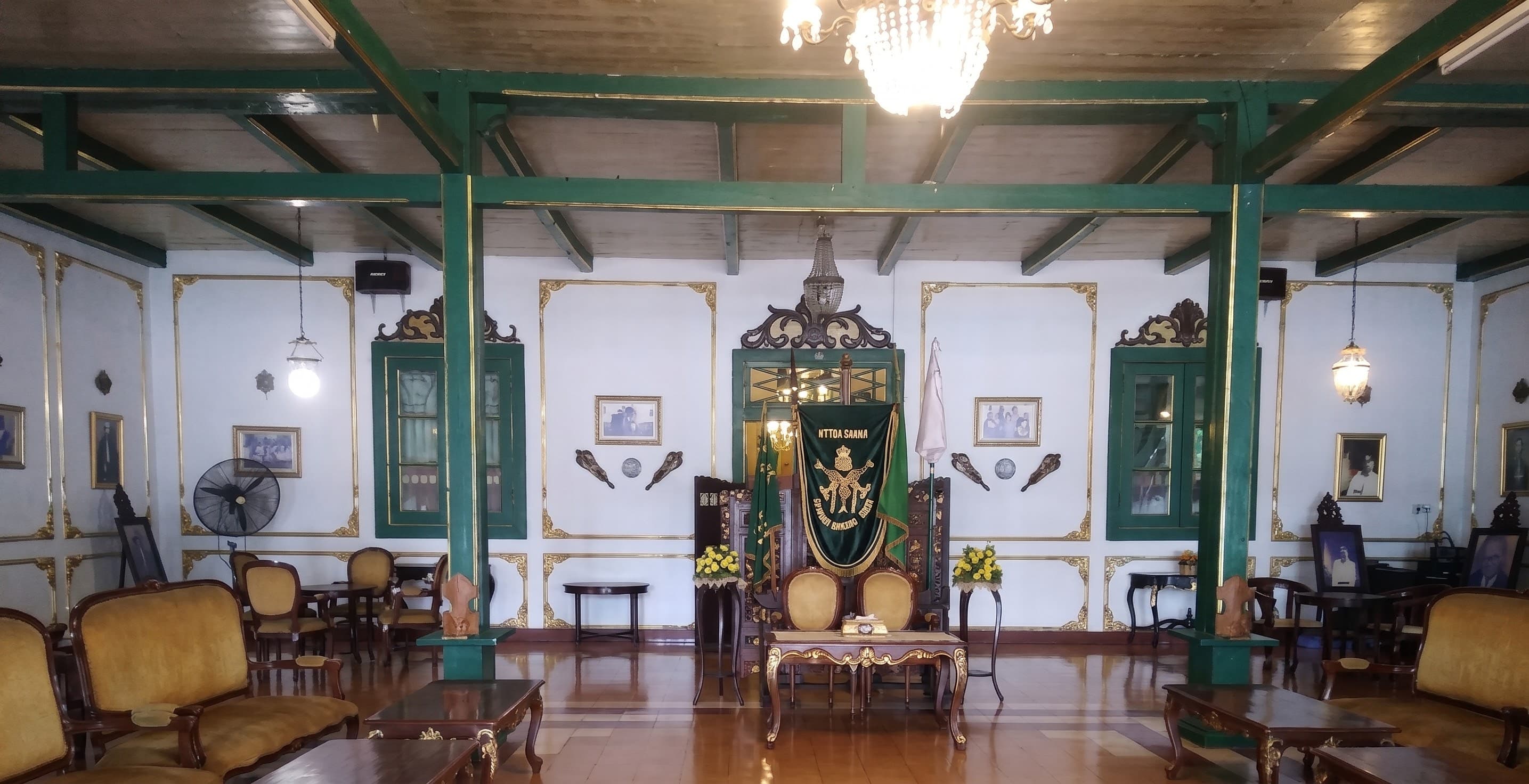
After the paseban area, visitors can see Pintu Selamatangkep (Figure 2). According to the explanation given during the visit, this gate is not always opened. Visitors then enter the area of Prabayaksa. The building has green elements and is supported by several main pillars. One of its parts, Ruang Jinem Prabayaksa, is a veranda where the Sultan receives guests and where certain palace ceremonies take place.
Before entering the building, visitors are asked to remove their footwear. I noticed several pairs of shoes and sandals placed near the steps (Figure 3). This simple rule shows that the palace is treated as a respected place.

Figure 3. A pavilion at Keraton Kacirebonan, Pulasaren, Cirebon.
Inside the palace, I saw various historical collections. Some of them include keris, swords, machetes, traditional wedding clothes, a handwritten Al-Qur'an, candle holders, banknotes from different countries, ceramic objects, and batik fabrics. I also saw an old Cirebon flag and historical documents related to the palace. These collections provide a glimpse of the objects preserved as part of Keraton Kacirebonan’s history.

Figure 4. Two ceremonial chairs with spears and parasols in a display room of the palace museum, Keraton Kacirebonan, Pulasaren, Cirebon.

Figure 5. Antique batik cloths in the museum cabinet, Keraton Kacirebonan, Pulasaren, Cirebon.
However, my visit did not cover every part of the palace or all of its collections. Therefore, there may be other historical objects and information that I did not have the opportunity to explore.
Living Traditions and Local Knowledge
Keraton Kacirebonan is not only known for its historical buildings and collections but also for its cultural traditions. During the interview, Pak Nono explained that several traditions are still associated with the palace, including Muludan, Suraan, Saparan, Rajaban, and Ruahan.
One of the important traditions is Muludan, which commemorates the birthday of Prophet Muhammad in the month of Rabiul Awal. One of its main events is the Panjang Jimat ceremony, held on the night of 12 Maulud. According to Pak Nono, this tradition involves the palace family, abdi dalem (palace attendants), and people living around the palace. The candle holders displayed in the palace are also used during the Panjang Jimat tradition.
Pak Nono also shared a story about Gamelan Denggung (Figure 6). He explained that, in the past, this traditional musical instrument was played to call for rain during the dry season. This story gave me another perspective on the cultural objects associated with Keraton Kacirebonan.

Figure 6. Gamelan Denggung, Keraton Kacirebonan, Pulasaren, Cirebon. Source: Indonesia Kaya (indonesiakaya.com)
During the interviews, I also learned that people around the palace use several languages, including Javanese, Sundanese, Cirebonese, and Indonesian. This variety reflects the different backgrounds of people who come from other areas to work or settle in Pulasaren.
Cultural Significance
Keraton Kacirebonan has cultural significance because it preserves different aspects of Cirebon’s heritage. Its historical buildings and collections represent the material side of culture, while traditions such as Muludan and Panjang Jimat represent cultural activities that are still associated with the palace. Local stories shared by the guide also provide knowledge about the values and practices connected to the palace.
The variety of languages used around the palace also reflects the different backgrounds within the community. In my view, these aspects show that cultural heritage is not only about preserving old buildings and objects but also about maintaining traditions and local knowledge. Muludan and Panjang Jimat, for example, show that Islamic celebrations are still practised within the palace, while the old Cirebon flag and the historical documents keep traces of Cirebon’s past visible to visitors. In my interpretation, the banknotes from different countries and the ceramic objects also suggest that Cirebon has long been connected to the wider world.
Therefore, Keraton Kacirebonan remains an important place for understanding Cirebon’s history and cultural identity. It also has the potential to introduce local heritage to visitors who want to learn more about Cirebon.
Conclusion
My visit to Keraton Kacirebonan gave me an opportunity to learn more about the history and cultural heritage of Cirebon. Through its buildings, historical collections, traditions, and stories shared by the guide, I could see that the palace has an important role in preserving local culture. Although I did not explore every part of the palace, the visit helped me understand that cultural heritage is not only something from the past. It can also remain meaningful through traditions, local knowledge, and the people who continue to preserve it. To keep this heritage alive, visitors should respect the palace’s rules, such as removing footwear before entering and listening to the guide’s explanations, and avoid touching or damaging the collections. Preservation also depends on the palace and the community continuing to pass these traditions on.
Sources
Field observation instrument, Pulasaren (keraton kacirebonan), 29 oktober 2026
Interview with Pak Nono, palace tour guide Keraton Kacirebonan

