

1. Introduction
Tucked away in Weru District, Cirebon Regency, Desa Setu Wetan is easy to overlook on a map, yet it holds much of what makes Cirebon’s culture distinctive: Islamic traditions practiced as community events, centuries-old buildings, a local dialect, and small food industries passed from household to household. This article documents the village based on a field observation conducted on 25 October 2026. The findings draw on interviews with two informants, a school teacher and a local resident, the author’s own experience as a native of Setu Wetan, photographic documentation, and a published news report. Together they show how an ordinary village can keep a living cultural heritage.
2. Main Content
Setu Wetan was once part of a single village called Desa Setu, which was later divided into Setu Wetan and Setu Kulon. Before the division, Desa Setu had only one main mosque, located in Blosongan, an area that now belongs to Setu Wetan. Today, most residents work as merchants, and local administration is based at the village hall shown in Figure 1.

Figure 1. The village hall of Desa Setu Wetan, Weru. Source: author’s documentation.
2.1 Village Profile and Historical Background
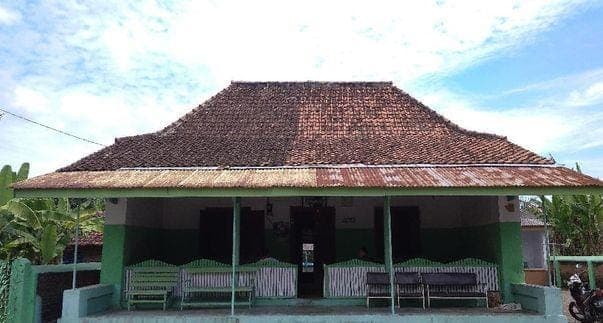
The village’s best-known landmark is Gedongan Jin, a traditional Javanese-Cirebonese house owned by the Soleh Hafid family (Figure 2). According to a 2017 report by Citrust.id, the house is more than 200 years old and has witnessed both the Dutch colonial period and the Japanese occupation. A village official quoted in the report described it as one of the three oldest buildings in the village, as old as the Maqbuluddu’a Mosque and the village hall. Residents do not know when it received its name, and many still regard it as a haunted house. The author observed that the house has since been cleaned and is now occupied by a son of Mr. Soleh Hafid.

Figure 2. Gedongan Jin, a historic Javanese-Cirebonese house, Desa Setu Wetan, Weru. The observation also showed that development challenges remain. Several village roads are in poor condition (Figure 3), with potholes that collect water and make travel harder for residents and visitors.

Figure 3. A damaged, waterlogged village road, Desa Setu Wetan. Source: author’s documentation.
2.2 Local Traditions
Religious life shapes the village calendar, especially around Muharram, the first month of the Islamic year. On the night of the first of Muharram, residents hold a torch parade in which children carry bamboo torches (Figure 4). On the tenth of Muharram, the community gathers for dhikr (devotional chanting), collective prayer, and a charity event for orphans (Figure 5), where Bubur Suro, a traditional porridge, is prepared and served (Figure 6). Village life also includes the celebration of the Prophet Muhammad’s Birthday and a parade during mass circumcision events. As a native resident, the author has experienced these Muharram traditions firsthand.

Figure 4. Children carrying bamboo torches during the Islamic New Year parade, Desa Setu Wetan. Source: author’s documentation.

Figure 5. Dhikr, communal prayer, and orphan charity event for the Islamic New Year, Desa Setu Wetan. Source: author’s documentation.

Figure 6. Bubur Suro prepared for the orphan charity event, Desa Setu Wetan. Source: author’s documentation.
2.3 Material Culture: The Mosque Well
One of the most intriguing findings is a well in the mosque grounds. In fact, two wells stand side by side inside a single square wall. On ordinary days the water is used for ablution (wudu), even though many ablution facilities are now available. The well also carries a local belief: mothers bathe children who cannot yet walk in its water on Friday Kliwon, during the daytime, when the mosque’s kentongan (wooden signal drum) is sounded before Friday prayers. They believe the practice helps children walk sooner. No record explains its origin, but it has been practiced for generations.

Figure 7. Babies bathed in the well near the mosque, Desa Setu Wetan. Source: author’s documentation.
2.4 Language and Local Products
Residents mainly speak Cirebonese Javanese, especially the older generation. Local vocabulary such as iro (“you”) and isun (“I”) reveals a distinctive way of speaking that forms part of the community’s identity. The village is also known for food products such as kerupuk mlarat and rengginang udang (shrimp rengginang), made by local households as small businesses (Figure 8). With better packaging and wider promotion, these products could grow and become a recognizable symbol of the village.

Figure 8. Production of kerupuk mlarat, a local small-business product, Desa Setu Wetan. Source: author’s documentation.
3. Cultural Significance
These findings matter because they show Cirebon’s identity as a lived practice rather than only a collection of monuments. Gedongan Jin and the mosque connect the village to the region’s colonial-era history. The Muharram traditions show how Islamic values and community solidarity shape public life, a central thread in Cirebon’s cultural heritage. The well belief and the local dialect preserve oral knowledge that written records rarely capture. Meanwhile, local crafts link heritage to livelihood and could support cultural tourism if promoted well. Small villages like Setu Wetan therefore form the foundation of Cirebon’s wider cultural identity.
4. Conclusion
Setu Wetan carries its history in an old house and a mosque, its values in annual traditions, and its identity in its language and food. Yet damaged roads, limited promotion, and the need to pass traditions on to the next generation remain real challenges. Preservation requires cooperation among the village government, residents, business owners, community leaders, and young people. By documenting and valuing what makes the village unique, the community can ensure that its heritage continues to be appreciated.
5. References
Author’s interviews with two informants (a school teacher and a local resident), Setu Wetan Village, Weru, Cirebon. Author’s field observation and photographic documentation, Desa Setu Wetan, 25 October 2026. Iskandar. “Dibalik Cerita Rumah Tua Dikenal Bangunan ‘Gedongan Jin’.” Citrust.id, 5 July 2017. Read the article: https://www.citrust.id/dibalik-cerita-rumah-tua-dikenal-bangunan-gedongan-jin.html
Sources
Dibalik Cerita Rumah Tua Dikenal Bangunan "Gedongan Jin"
Interviews with two informants (a school teacher and a local resident)
Author's field observation and photographic documentation

