

Introduction
Desa Kecomberan is located in Talun District, Cirebon Regency, West Java. On Saturday, 24 October 2026, I conducted a field observation in the village between 12.00 and 16.00 WIB to identify its cultural potential, local economy, and language use. One of the main findings is Sumur Gede, a site that serves as a center for several religious activities and community traditions. The data in this article come from two interviews, photographic documentation, and my knowledge as a speaker of Cirebonese.
Sumur Gede: The Well Behind the Village Name
The main informant, Shafwan Mufrody, explained that Sumur Gede is connected to the origin of the village's name. According to him, an ulama from the Megu area, Ki Gede Sayidina Raden, found a water source where there was no adequate water channel, and then built the well together with the residents. This story is the informant's account and has not been verified against historical sources, so it is presented as a story told by the community.
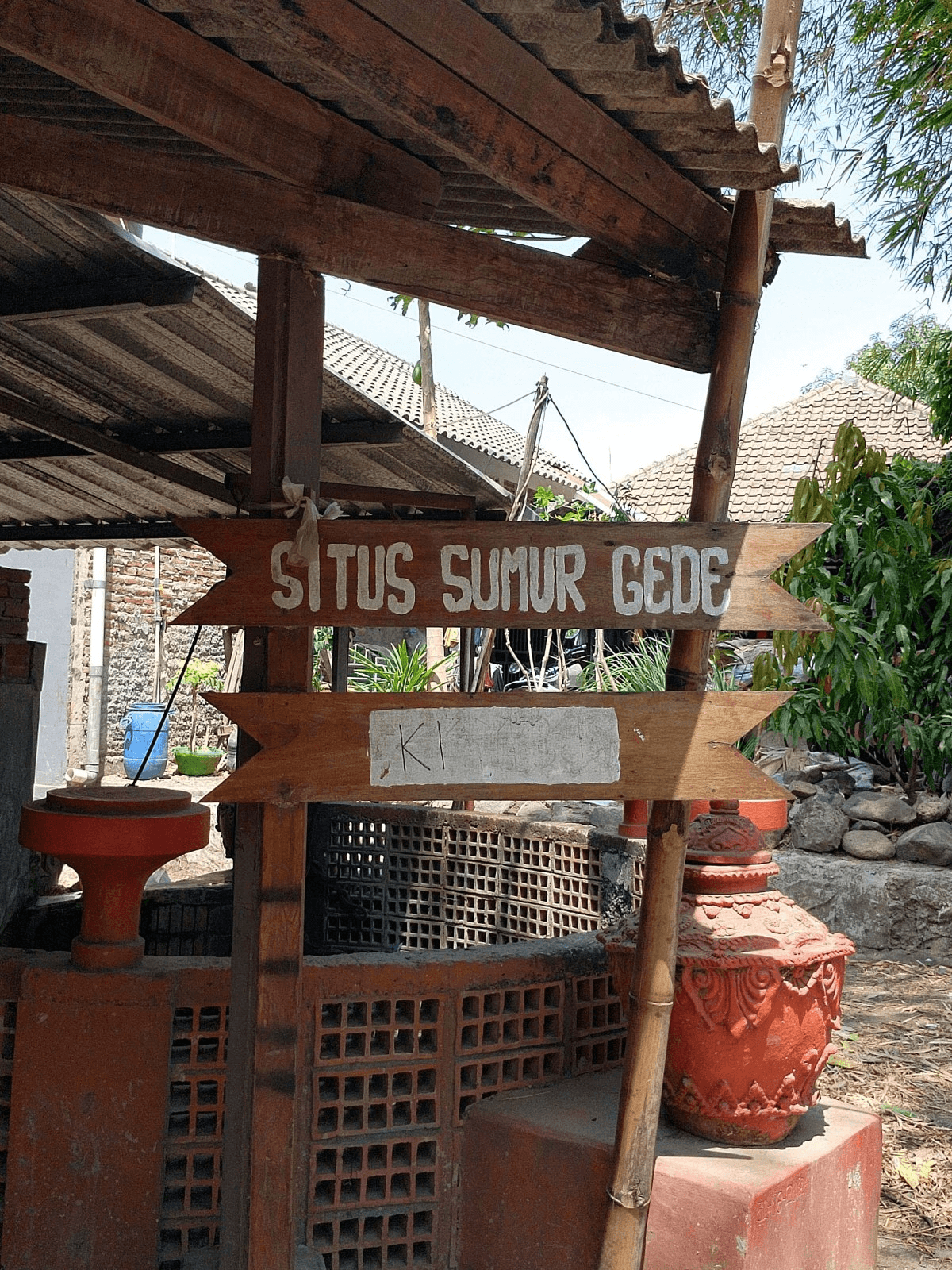
The site consists of the well, a sign, Pendopo Sumur Gede, and a village cemetery nearby. According to the informant, the water is believed to remain available in the dry season and is used by residents for daily needs, including washing clothes while children bathe. Pilgrims also visit to learn the history of the place and to seek blessings according to their beliefs, and some perform curak or sawer as charity for the residents.


Traditions That Are Still Alive
The pendopo next to the well is used for religious and community activities, including Rajaban, Maulid, and sedekah bumi. During sedekah bumi, each household prepares about four to five food packages called berkat. The food is collected and shared again among the residents. The informant summarized the principle in the phrase "berkatnya dari warga untuk warga" (the food comes from the residents and goes back to the residents).


Other traditions are connected to family events. In curak or sawer, a family scatters coins mixed with rice and candy on happy occasions, such as a wedding or a child's first steps, as an expression of gratitude and sharing with neighbors. Weddings and circumcisions may be celebrated with arak-arakan, a procession with decorated structures accompanied by genjringan music. In the month of Safar, some families share apem cakes, which are believed to ward off misfortune, although the practice is not compulsory. In some prayer rooms, including Mushola Al Hidayah, the call to prayer is still performed without loudspeakers, using a kentongan, as a way to respect earlier generations.
In aqiqah, some families prepare pisang tundun, rice, coconut, and Javanese sugar, and decorate the goat with a white cloth, a garland of seven flowers, and a mirror. According to the informant, these items are inherited customs and not requirements of the ceremony, so they are not practiced by every family.

Everyday Economy and Language
The economic activity found during the observation is a sembako shop owned by Yulian in Gang Mushola, which opened in 2025 because the location was considered strategic. According to Yulian, sales were fairly good at first, then began to fluctuate from day to day, and she plans to add more variety to her products. The shop is a supplementary source of income for her family. Visits by pilgrims to Sumur Gede may create opportunities for small businesses nearby, but the number of visitors and their spending were not measured in this observation, so the economic impact cannot yet be confirmed.

In daily life, residents use everyday Cirebonese, bebasan, and a mixture of Cirebonese and Indonesian, depending on the situation. Based on my observation as a speaker of Cirebonese, older speakers, including my father, often use bebasan, for example "Kula ajeng tumbas lisa lentik" ("I want to buy cooking oil"), while younger speakers tend to mix Cirebonese and Indonesian. Indonesian is used in schools, the community health center, and the village office. This observation is personal and not a systematic survey, but it is consistent with the idea in the Cirebonese dialect linguistic atlas that language varies across social groups and situations (Juwintan, 2025).
Cultural Significance
The findings in Desa Kecomberan show values of gratitude, sharing, and respect for earlier generations in traditions such as curak, sedekah bumi, apem, and the call to prayer without loudspeakers. Sumur Gede connects the village's name, its water source, and the religious life of its residents in a single site. These cultural practices are not uniform: some families still keep the dogawean wedding customs, such as preparing sesajen, while others have stopped. This variety shows that Cirebon's cultural heritage is lived in different ways and changes over time. A preliminary assessment places Sumur Gede at medium potential for cultural and religious tourism (16 out of 24), mainly because of its uniqueness, while access, facilities, and community readiness still need to be checked. Any development should involve the residents and should not alter traditions solely for commercial purposes.
Conclusion

The observation in Desa Kecomberan found several traditions that are still practiced, namely curak or sawer, sedekah bumi, arak-arakan, the sharing of apem in the month of Safar, and customs in aqiqah and weddings. Sumur Gede and Pendopo Sumur Gede serve as centers of religious activities and community traditions, while Cirebonese remains in daily use alongside Indonesian. Preserving this heritage requires careful documentation, permission from residents, and an account of its meanings that follows what the community says. Thanks are due to Shafwan Mufrody and Yulian for serving as informants.
References
Juwintan. (2025). Atlas linguistik bahasa Jawa dialek Cirebon: Kajian geolinguistik terhadap variasi fonologis dan leksikal berdasarkan distribusi geografis dan sosial. Universitas Pendidikan Indonesia.
Interview with Shafwan Mufrody, Desa Kecomberan, 24 October 2026.
Interview with Yulian, Gang Mushola, Desa Kecomberan, 24 October 2026.
Author's field observation and photographs, Desa Kecomberan, 24 October 2026.

