

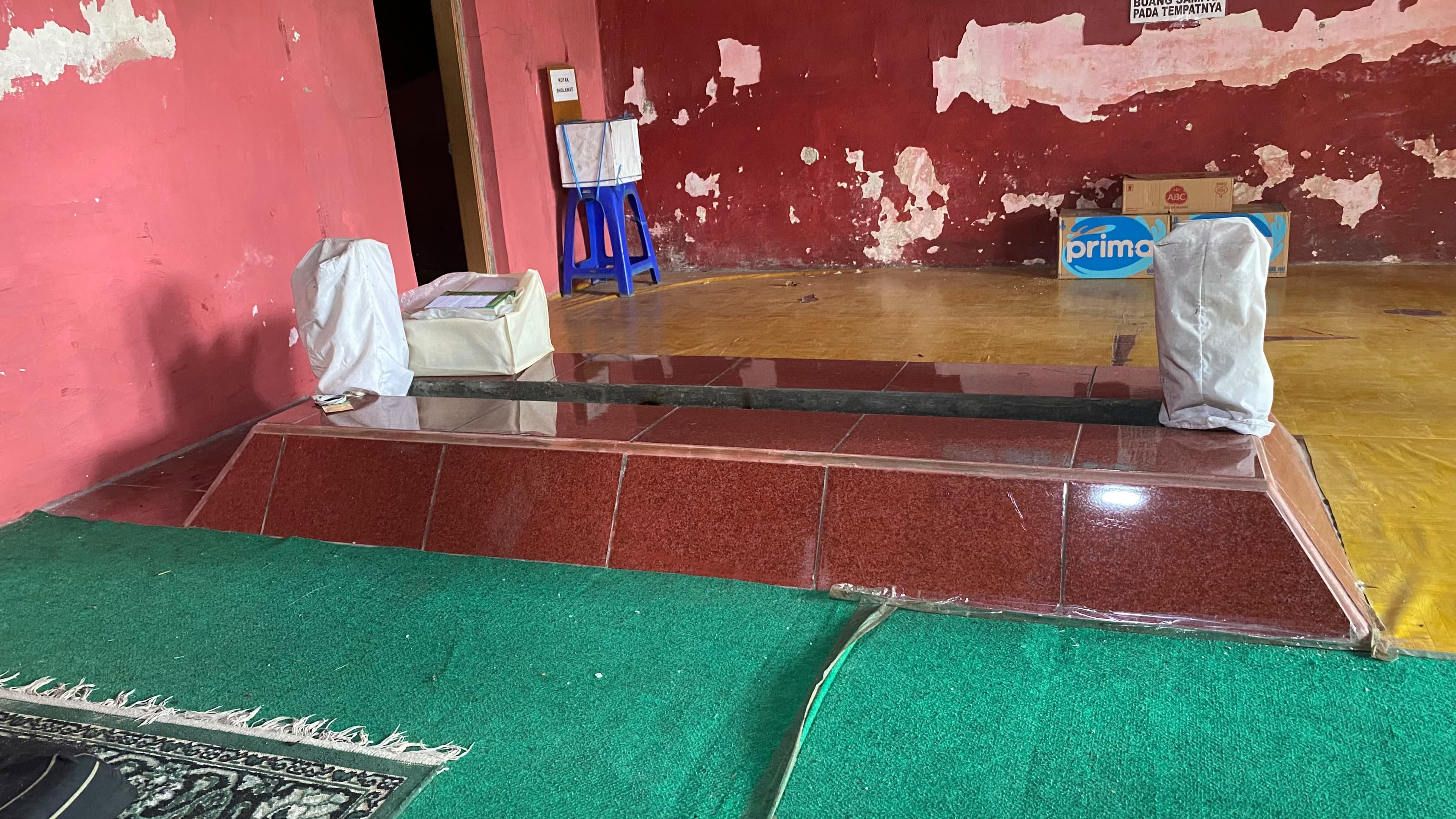
Cirebon City is one of the regions in West Java that has a rich history and Islamic cultural heritage. Various historical sites can still be found in several areas, one of which is in Jagasatru Village, Pekalipan District, Cirebon City. In this area, there is the Pangeran Cucimanah Mosque, which is located near a cemetery complex known as Sapu Jagat Cemetery. The existence of the mosque and cemetery represents an important part of the historical, cultural, and religious identity of the local community. The Pangeran Cucimanah Mosque is not only used as a place of worship but is also associated with historical stories and local traditions. Around the mosque, there are graves believed to belong to three figures known as Pangeran Cucimanah, Pangeran Jagasatru, and Pangeran Sapu Jagat. This area demonstrates the relationship between historical heritage, religious values, and the social life of the Cirebon community.
2. Main Content

2.1 The History and Existence of Pangeran Cucimanah Mosque The Pangeran Cucimanah Mosque is located on Pangeran Cucimanah Street, Jagasatru Village, Pekalipan District, Cirebon City, West Java. It is situated along a main road, making it relatively easy for local residents and visitors from other areas to find. According to an article published by detikJabar on January 3, 2024, the building was originally a small prayer room known as Musala Al-Karomah. Over time the place of worship became known as the Pangeran Cucimanah Mosque. The change in its name is associated with the presence of three princely graves located within the same area as the mosque. The mosque also serves as a place for various religious activities. These activities include religious study sessions after the dawn prayer on Sundays, collective tawassul every Thursday night, and free rice distribution every Friday. These activities demonstrate that the mosque plays an important role in religious life while also strengthening social relationships among local residents. the Pangeran Cucimanah Mosque represents the connection between religious life, local history, and community traditions in Jagasatru, Cirebon. Its development from a small prayer room into a mosque, its association with the nearby historical graves, and its continuing religious and social activities make it an important place for the local community. Preserving the mosque means not only maintaining its physical structure but also protecting the religious activities, historical stories, and cultural values that have become part of the community's identity.


2.2 Sapu Jagat Cemetery and the Three Princely Figures One of the interesting features of this area is the cemetery complex associated with three figures: Pangeran Cucimanah, Pangeran Jagasatru, and Pangeran Sapu Jagat. These graves have historical and cultural significance for the local community. According to local historical accounts shared by site caretakers and community members, the three figures are believed to have been connected to the development of the Jagasatru area and the spread of Islam. Pangeran Jagasatru is often associated with protecting the surrounding area, while Pangeran Cucimanah and Pangeran Sapu Jagat are also recognized in local stories as important figures from the past. The existence of these graves demonstrates how stories about historical figures remain part of the community's collective memory. However, information about the lives and roles of each figure should be understood by considering available historical sources and oral traditions that have developed within the community.
2.3 Cucimanah Well and Local Beliefs In addition to the mosque and cemetery, the area also has a well known as the Cucimanah Well. The well is located near the mosque, not far from the ablution area. According to local beliefs, the water in the well never dries up, and people from various regions often visit it. For some members of the community, the well has historical and spiritual significance because it is associated with Pangeran Cucimanah. Its existence has become one of the area's attractions and demonstrates that local stories and beliefs continue to have a place in community life. However, the belief regarding the special qualities of the well's water is part of local tradition and community stories rather than an established scientific fact. Therefore, its existence can be understood as an interesting part of the area's cultural heritage. However, it is important to distinguish between local beliefs and scientifically verified information. The belief that the water in the Cucimanah Well never dries up should be understood as a local tradition unless supported by scientific observation.

Similarly, stories about its historical connection with Pangeran Cucimanah should be supported by reliable historical sources if they are presented as established facts. The preservation of the Cucimanah Well is therefore important as part of the cultural and historical environment of Jagasatru. Maintaining its cleanliness, protecting the surrounding area, and documenting the stories associated with it can help ensure that this local heritage remains known to future generations. Overall, the Cucimanah Well is not only a physical feature near the mosque but also a symbol of local memory, cultural identity, and community beliefs in Jagasatru, Cirebon.
2.4 Religious Traditions and Community Social Life Religious activities at the Pangeran Cucimanah Mosque demonstrate that the area continues to play an important social role. Religious study sessions, tawassul, and free rice distribution are examples of activities that are not only related to worship but also encourage togetherness and social awareness. Furthermore, the tradition of visiting graves is still practiced by some visitors. Grave visitation, commonly known as ziarah kubur, is a way of showing respect for those who have passed away and provides visitors with an opportunity to pray and reflect on life. During these visits, people are expected to maintain proper behavior, cleanliness, and order within the cemetery. Social life around this area also reflects the use of regional languages in everyday communication. Based on field observations and interviews with local residents, the Javanese language is still used in daily interactions. This shows that regional languages remain an important part of the cultural identity of the Jagasatru community.

The religious traditions in this area are also closely connected to the community's social relationships. Activities at the mosque provide opportunities for residents to meet, communicate, and support one another. People from different backgrounds can participate in religious gatherings and interact with their neighbors. These interactions help maintain social harmony and strengthen the sense of belonging within the community. and at every Friday prayer, there are people who hand out free food and drinks to the congregation, religious traditions and community social life around Pangeran Cucimanah Mosque and Sapu Jagat Cemetery demonstrate a close relationship between faith, culture, and social interaction. Religious activities strengthen spiritual values, grave visitation preserves local traditions, and everyday communication maintains social relationships. These practices show that the mosque and cemetery are not merely physical places but also important parts of the community's identity and collective life in Jagasatru, Cirebon.
3. Economic Activities Around the Area The existence of the mosque and cemetery is also connected to the economic activities of the surrounding community. One activity that can be observed is the sale of flowers, which are commonly used by visitors during grave visits. This activity represents a small business that serves the needs of pilgrims and visitors. In addition, there is a shop in the surrounding area that sells traditional musical instruments, such as the angklung.
The existence of this business shows that local economic activities are not only related to grave visitation but also include trading activities connected to traditional culture. Therefore, the Pangeran Cucimanah Mosque and Sapu Jagat Cemetery area has not only historical and religious value but also provides opportunities for local economic activities. The relationship between religious activities, visitors, and small businesses demonstrates how the presence of cultural sites can benefit the surrounding community.
4. The Importance of Preserving Historical and Cultural Sites The Pangeran Cucimanah Mosque and Sapu Jagat Cemetery are part of the local historical and cultural heritage that should be preserved. Preservation does not only involve maintaining the buildings and graves but also protecting traditions, historical stories, and social values that have developed within the community.
Local residents, mosque administrators, cemetery caretakers, and the local government can work together to maintain cleanliness, monitor the condition of the buildings, and provide accurate historical information to younger generations. Introducing these sites through educational activities and documentation can also help increase public awareness of the importance of cultural heritage. Preservation efforts should continue to respect the main function of the mosque as a place of worship and the cemetery as a place for honoring those who have passed away. Therefore, developing the area as a religious and cultural tourism destination should take into account its sacred values and the comfort of the local community.
5. Conclusion The Pangeran Cucimanah Mosque and Sapu Jagat Cemetery in Jagasatru Village, Pekalipan District, Cirebon City, represent an area where history, religion, culture, social life, and the local economy are closely connected. The existence of the three princely graves, the Cucimanah Well, and various religious activities gives this area significant value for the local community. Field observations show that the area does not only function as a place of worship and grave visitation but is also part of the everyday life of the local community.

Activities such as selling flowers for grave visitors, the presence of a traditional musical instrument shop, and the use of regional languages demonstrate the relationship between cultural heritage and the social and economic life of local residents. Therefore, the Pangeran Cucimanah Mosque and Sapu Jagat Cemetery should continue to be maintained and preserved. Through cooperation between the community and relevant parties, the historical, cultural, and religious values of the Jagasatru area can remain recognized and passed down to future generations.
6. References Field observation in pangeran sapu jagat , pekalipan district, Cirebon Regency, October 27, 2026
Interview with Sutama, Caretaker information, October 27, 2026
Personal field documentation informant, October 27, 2026
The pangeran cucimanah mosque and sapu jagat cemetery Historical Heritage, Religious Values, and Community Life in Cirebon
Sources
Historical information about sapu jagat cemetery

