

Introduction

Picture 1. The "Kawasan Batik Trusmi" welcome gate on the main road, Plered Subdistrict, Cirebon Regency. Source: the author's personal documentation.
Trusmi Wetan is a village in Plered District, Cirebon Regency, West Java. Most people know it for batik, and the red-brick gate on the main road welcomes visitors with the words "Kawasan Batik Trusmi." The village is close to the Pantura highway, so it is easy to reach from Cirebon city or from the Sumber direction by motorbike, car, or bus.
I did my field observation on 28 October 2026 around Blok Klentikan, near Masjid Keramat Buyut Trusmi. I interviewed Ibu Umini and Ibu Ade, two residents who were born and raised here, and I recorded my findings with an observation instrument. On 1 November 2026, I went back to Plered to see the Memayu tradition myself. My goal was simple: to see how traditions, sacred sites, and batik work in daily life, and what threatens them.
Background and Sites
According to Ibu Umini, the name "Trusmi" comes from the phrase terus bersemi, which means "keeps on blooming." She said the area used to be grassland and forest that residents cleared, and then it grew back. Stories from the elders say people began to settle here around 1405 and that the area became busier around 1470.

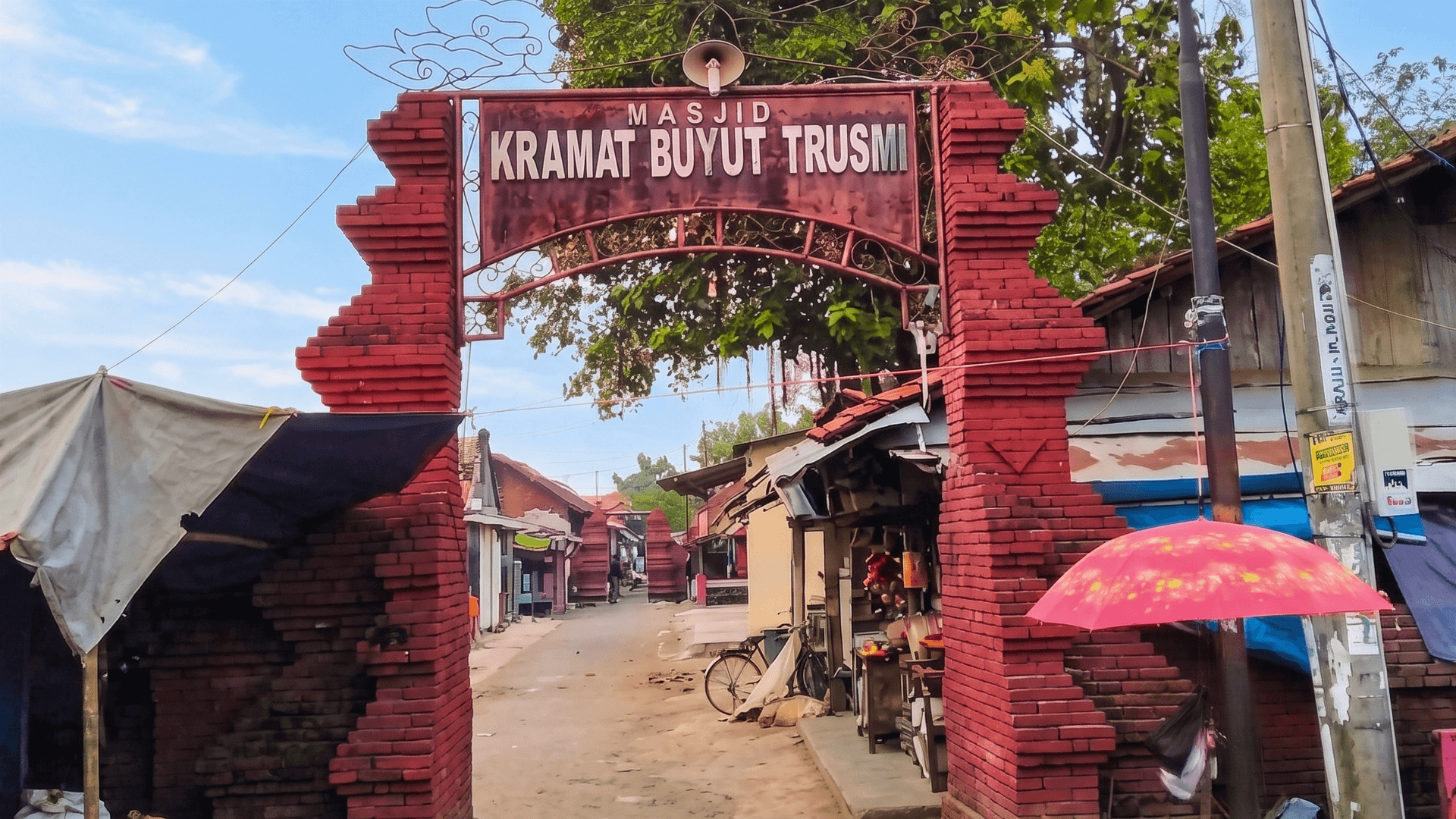
Picture 2. The entrance gate to Masjid Keramat Buyut Trusmi, Trusmi Wetan Village, Plered Subdistrict, Cirebon Regency. Source: the author's personal documentation.
The first site I visited was Masjid Keramat Buyut Trusmi. A red-brick gate leads into the lane toward the mosque. Inside, there is a large hanging drum, carved wooden pillars, and an old standing clock. The roof is made of reed (alang-alang), a material that is rare to see today. The mosque is more than a place of worship, because it is the center of several traditions that honor Ki Buyut Trusmi.

Picture 3. Inside Masjid Keramat Buyut Trusmi, with a hanging drum, carved wooden pillars, and an old standing clock. Source: the author's personal documentation.
Not far from the mosque is Balong Pekulahan, a pond. A sign beside it warns visitors to be careful because the pond is seven meters deep. The pond is part of the Buyut Trusmi site and has its own place in local belief.

Picture 4. Balong Pekulahan, a pond near the mosque complex in Trusmi Wetan Village, with a sign warning that it is seven meters deep. Source: the author's personal documentation.
Local Traditions and Ethos

Picture 5. A procession (arak-arakan) during the Memayu event, Plered Subdistrict, Cirebon Regency. Source: the author's personal documentation.
Both interviewees explained that the mosque's reed roof is replaced once a year in a tradition called Memayu. I saw it in person on Sunday, 1 November 2026. Residents told me Memayu is always held on the first Sunday of November. The people doing the work were not special officials but residents who volunteered to help, including children who looked excited about the event. It was crowded. There were a few disturbances, but overall the residents and visitors seemed to enjoy it. Afterward, people shared kupat and lepet. These two foods are made especially for Memayu as a sign of gratitude and respect to Ki Buyut Trusmi.

Picture 6. Kupat and lepet made for the Memayu tradition, Plered Subdistrict, Cirebon Regency. Source: the author's personal documentation.
Residents also told me that every four years there is Buka Sirap, a thorough cleaning and repair of the mosque. They also described a procession in which a sacred heirloom called gaman is carried around. Gaman is a weapon from the past that is considered sacred. The procession is led by caretakers (kuncen) dressed in white and accompanied by Cirebon coastal songs. The heirloom is only shown during certain rituals.
From the interviews, I also noted the values that residents hold. They mentioned honesty in trading and guyub, which means living in harmony and helping each other. According to them, this is why there has never been a fight between neighborhoods. Vendors must clean up their own trash after selling, and there is a rule against sleeping after the dawn prayer because that time is meant for earning a living. Good manners are also kept through language. People use the polite level of Cirebon language (bebasan or kromo) with elders and in village meetings, ngoko with friends, and a mix of Javanese and Indonesian with young people or outsiders.
Cultural Significance

Picture 7. Megamendung batik cloth in grayish blue, Trusmi Wetan Village, Plered Subdistrict, Cirebon Regency. Source: the author's personal documentation.
Batik may be the strongest identity of Trusmi. Residents make both hand-drawn (tulis) and stamped (cap) batik. The history of batik in this area is said to begin with Ki Buyut Trusmi, the same figure honored through the mosque traditions above. The motif most connected to Cirebon is Megamendung, whose name means "rain clouds." In the cloth I photographed, the clouds appear as layered curls, some in grayish blue and some in gold on a blue background. Residents told me this motif has become the icon of Cirebon batik as a whole.

Picture 8. Megamendung batik cloth in gold on a blue background, Trusmi Wetan Village, Plered Subdistrict, Cirebon Regency. Source: the author's personal documentation.
The name carries meaning too. "Mega" means cloud, while "mendung" refers to a rain-bringing cloud that cools things down, and the colors usually fade in seven layers. Elang Hilman, a Cirebon cultural figure, reads the wide cloud as a picture of the palace protecting its people and bringing calm. Over time, the motif has also been combined with flowers or animals to match market demand.
Batik is also how people earn a living, and what stood out to me was how different generations work together. Older makers produce the cloth, while younger family members sell it through e-commerce and social media, with orders coming from all over Indonesia. Food vendors benefit too, especially during Maulid and on Thursday nights before Jumat Kliwon, when pilgrims visit.
The meaning of the sites is not the same for everyone. Some residents believe the water of Balong Pekulahan can heal illness, protect against black magic, or bring luck to a business. However, young people and religious residents now question this belief because they worry it leads to syirik, or associating something with God. The old rule against traveling on Saturday has gone through a similar change. Young people see it as an old myth, while the elders still treat it as advice to be careful.
Contemporary Threats and Environmental Risks
Trusmi Wetan has strong potential as a cultural and religious tourism destination. Visitors can join batik workshops, visit the Buyut Trusmi site, and try local food such as docang, empal, and nasi lengko. Using the scoring in my observation instrument (six aspects, maximum 24), I gave the village 22, which I categorize as high potential.
Still, high potential does not mean the village is ready. The crowd at Memayu gave me a small picture of what could happen when more visitors come. From my observation and interviews, I noted risks such as piling trash, illegal parking, and traffic jams. My biggest worry is that crowds of onlookers could disturb the solemn atmosphere of the heirloom procession.
The government has also started to act. The Cirebon Regency government has begun to focus on organizing the Trusmi area, from street vendors and illegal parking to homeless people and beggars, involving the transportation office, the cooperatives and SMEs office, and the civil service police. In July 2025, the police also cleared illegal parking attendants in this tourist area.
Conclusion
The name terus bersemi fits this village well. Its traditions keep growing because people keep practicing them. The mosque, Balong Pekulahan, Memayu, Buka Sirap, and Megamendung batik are still alive in the hands of residents, including the younger generation. The challenge is to open economic opportunities without damaging what residents consider sacred. In my view, tourism management should involve the youth organization (Karang Taruna), the village government, kemit and kuncen, batik communities, and food entrepreneurs, including in managing trash and parking by using empty land.
Sources
Interview with Ibu Umini, resident of Trusmi Wetan, 28 October 2026
Field observation instrument, Trusmi Village, 28 October 2026
Direct observation of the Memayu tradition, Plered, 1 November 2026 (photos and video)
Getting to Know the Characteristics of Mega Mendung Batik, an Aesthetic Masterpiece from Cirebon
Mega Mendung, Cirebon's Signature Batik, Becomes the Logo of the IPNU-IPPNU Congress
Analisis Perkembangan Batik Trusmi sebagai Ikon Kearifan Lokal Cirebon
Cirebon Regency Government Focuses on Developing the Trusmi Area as a Leading Tourist Destination
Keeping Cirebon's Tourism Image Clean: Illegal Parking and Vagrants Cleared

