

Introduction
Cirebon is known as a place where Sundanese and Javanese cultures meet. Besides the palaces, many villages in Cirebon also keep their own traditions. One of them is Sidawangi Village in Sumber District, Cirebon Regency, West Java. On 26 October 2026, I visited Sidawangi to do a field observation. I interviewed two residents, Mr. Rohimin and Mrs. Eva. In this article, I write about what I saw and heard there. Sidawangi is a village where people of different religions live side by side, where sacred places are respected, and where a new business for the village is just starting. I think these things are important because they show that culture is still alive in daily life.
Village Profile and History
Sidawangi is a village of farmers, traders, and workers. The interviewees said that the village was formed from two villages, Cikadu and Capar, which became one. Most people work as farm labourers. Some sell vegetables or coconuts at the market or at loading and unloading places. Many young people work in factories or leave the village to find jobs. There are also local businesses, such as CV Sanjaya Maju Sejahtera and PT Bersama Bangun Pangan. They make meatballs, otak-otak, and nuggets, and they give jobs to people in the community.
The village is cool and green because there are still many trees. The roads are good, but the internet is not available everywhere. In some neighbourhoods it is hard to get a signal, so about 90 percent of the residents use WiFi, as the interviewees said. They also told me that people in Sidawangi speak Sundanese all the time in their daily lives.
Religious Harmony
The first thing that makes Sidawangi different is its religious diversity. According to the interviewees, not everyone in the village is Muslim, because there are five religions there. We can see this clearly in the village. Santa Maria in Montana Catholic Church is right next to the mosque (Photos 4 and 5). Each place of worship is used by its own community, but they stand side by side. For me, this is a simple and clear sign that people in Sidawangi respect each other.
Sacred Places and Local Beliefs
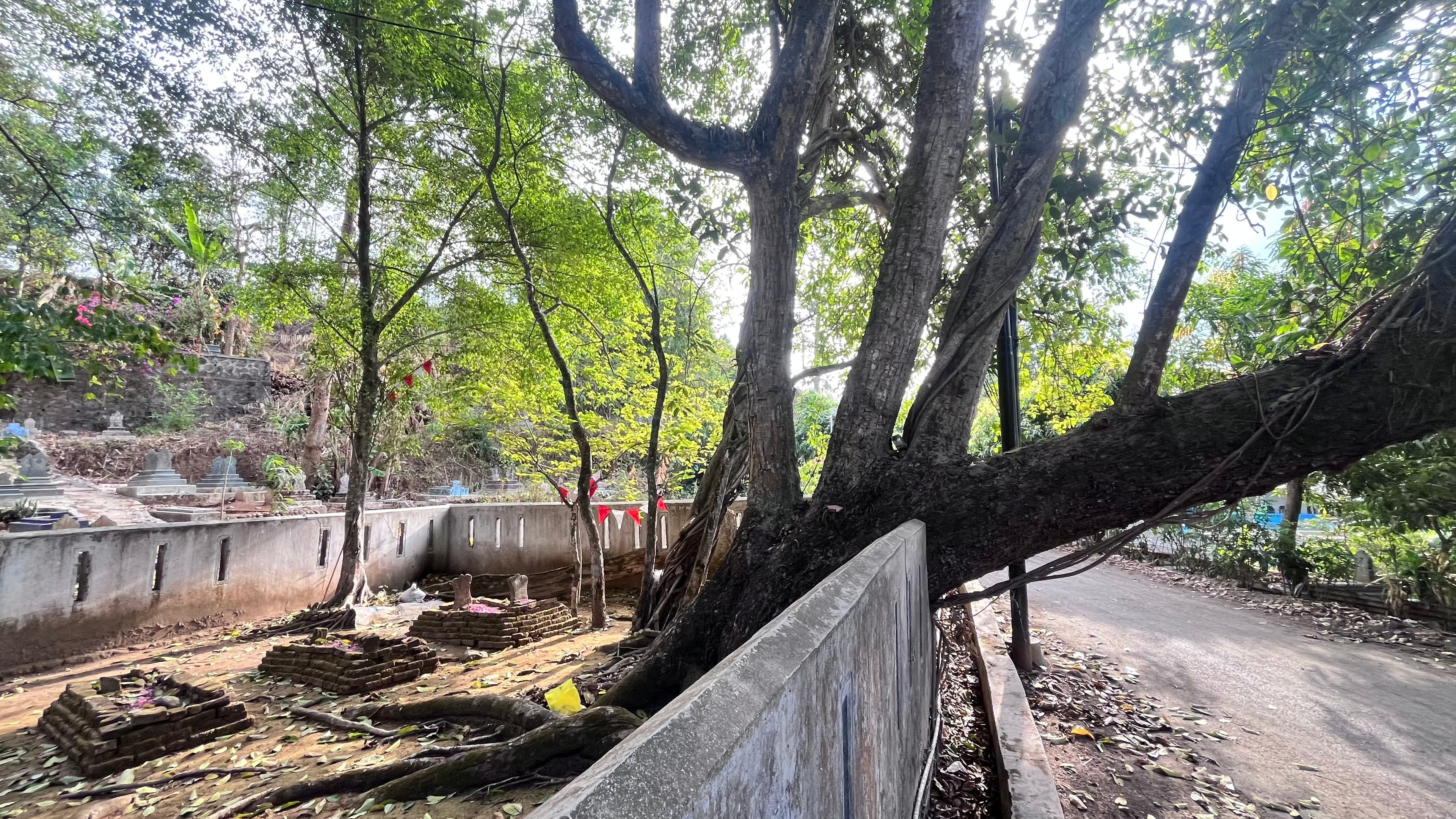
Sidawangi also has several places that people believe are sacred. The first is the tomb of Buyut Putih. Near the tomb, there is a big tree that grows across the road (Photos 1 and 2). The interviewees said that this tree must not be cut down. People who are new to the area are expected to honk their horns when they pass, as a way of asking permission. Some people also do surak or throw coins there to show respect.
The second place is Sumur Kejayaan, a well that is also considered sacred (Photo 3). The interviewees said that people believe the water can heal illnesses. Because of this, many people come just to take a bath or to take water from the well. After they finish, they usually throw a coin at the well. People in the village also have a taboo about travelling on "manis" days or dates, because it is believed to bring bad luck.
These beliefs are not only old stories. People still follow them today. For example, there is still a rule to honk at the tree, and many people still visit the well.
Traditions
Residents still know several traditions. They are sedekah bumi (a thanksgiving tradition for the earth's harvest) or sharing food together, a torch procession around the village, surak, sedekah, and muput. In general, these traditions are a way to say thanks, bring the residents closer, and respect the ancestors. In this visit, I did not record the exact time and steps of each tradition. I need to ask the local people again to be sure.
Economic and Tourism Potential
The village is also thinking about becoming a tourism village. The interviewees said that the permission has been given, but the attractions and facilities are not finished yet. The village has also started to work together with a rattan factory to make handicrafts. This could become a new source of income for the villagers. I used an observation form to give a simple score for the village's potential, and the result was 17 out of 24, which is in the medium category. The good points are its unique culture and good roads. The weak points are the uneven internet and the fact that some places are sacred, so the village must plan carefully.
Cultural Significance
In my opinion, Sidawangi is important for Cirebon's cultural identity for three reasons. First, the way people of different religions live together shows an open attitude. A church next to a mosque is a real example of living in peace, and this is part of the social heritage of the region.
Second, the sacred tree, the tomb, and the well show that old beliefs are still alive in daily life. Stories, manners, taboos, and rituals are passed down by doing them, not only through museums or books. If people stop doing them, the knowledge and values behind them can disappear.
Third, the village shows that culture and development must go together. Tourism and rattan crafts can bring income, but the interviewees stressed respect for sacred places. So, development should follow local rules. If the well or the tomb is used only to make money without the community's agreement, its meaning can be lost.
Conclusion
Sidawangi may look like an ordinary village, but my observation shows that it has a rich culture. It was formed from two villages, it has five religions living together, it has sacred places that are still respected, and it has traditions that bring people together. To protect these things, we need to record them carefully, invite the residents and religious leaders to join any development plan, and keep sacred places safe from careless use. Culture can survive only if people keep practising and respecting it, and Sidawangi is a good example of this.

