

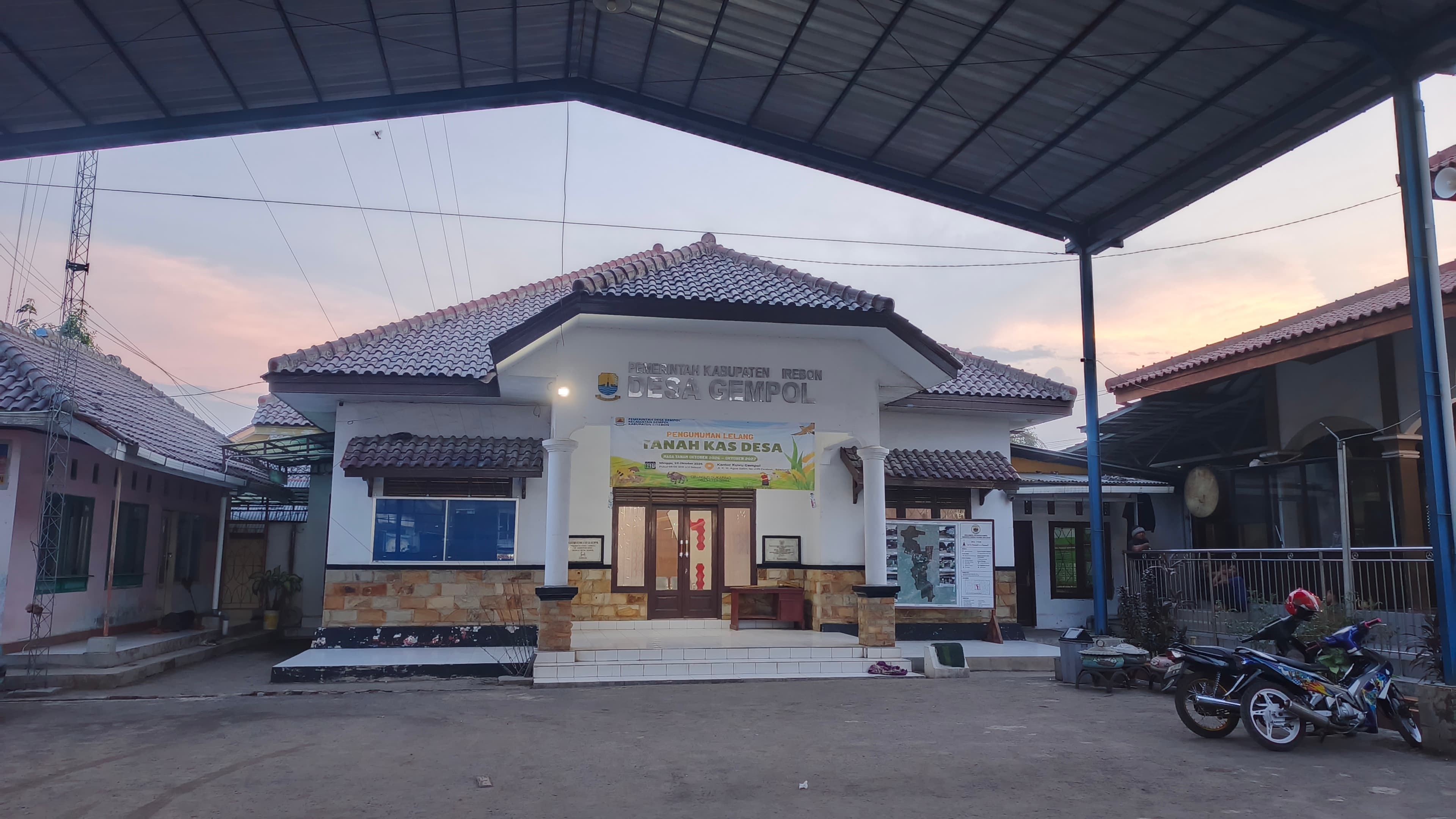
Introduction
Gempol Village is one of the villages located in Gempol District, Cirebon Regency, West Java, Indonesia. The village has interesting characteristics in terms of its social life, local culture, economic activities, and historical heritage. This observation aims to explore the general condition of Gempol Village and understand how its community maintains local traditions while adapting to modern economic development. Through direct observation, several important aspects were identified, including population distribution, occupations, local language, agricultural activities, historical sites, and tourism potential.
Geographical and Demographic Conditions
Based on the village information presented during the observation, Gempol Village has a population of approximately 2,255 people. This population consists of 1,110 males and 1,145 females. The demographic data shows that the number of female residents is slightly higher than the number of male residents. This information provides an overview of the community's population structure and social composition. The village also has several public facilities, including educational institutions, health services, religious facilities, and sports facilities. These facilities support the daily activities and basic needs of the local community.
Local Language and Culture identify
One of the most interesting findings from this observation is the use of the Cirebon language in everyday communication. Local residents generally maintain their regional language as an important part of their cultural identity. In terms of culture, Gempol Village shares similarities with other communities in Cirebon Regency. Local traditions and community activities demonstrate how cultural values are maintained across generations. One example is the tradition known as Munjung Buyut or Sedekah Makam. This activity is associated with visiting ancestral graves and reflects the community's respect for its historical and cultural heritage. Economic Activities and Occupations The economic structure of Gempol Village consists of several occupational sectors. Based on the data presented in the observation, the distribution includes: • Employees: 45.7% • Traders: 26.1% • Construction workers: 19.6% • Farmers: 8.7%
The data indicates that employees represent the largest occupational group. Many residents work in industrial sectors, including cement production, rattan industries, and logistics warehouses. Other residents work in construction and transportation services. Small and medium-sized businesses also contribute to the local economy. These businesses include traditional grocery stores, small food stalls, motorcycle repair services, and local culinary businesses. Meanwhile, agricultural activities remain part of the village's economic identity. However, farming and gardening are mainly carried out by a smaller group of residents, particularly the older generation. Historical Sites and Local Stories Gempol Village also has several locations associated with local history and traditional stories. One of these places is Curug, located in the eastern part of the village. According to local stories, the area is associated with a mystical figure known as Nyi Brintik. Although this story cannot be considered historical evidence, it represents an example of local folklore that contributes to the village's cultural identity. Another interesting location is Kali Gedung. According to information presented during the observation, the river was originally known as a well in the past. This story provides insight into how local geographical places are remembered and interpreted by the community. Furthermore, Makam Buyut is an important cultural location. Local residents traditionally gather at this place for Munjung Buyut, an activity that reflects respect for ancestors and the preservation of community traditions.
Agriculture and Environmental Conditions
Agriculture remains visible in the landscape of Gempol Village. Rice fields, gardens, and green agricultural areas demonstrate that farming still has a place in the community.
Although agriculture is not the dominant occupation according to the collected employment data, it remains significant for local identity and traditional livelihoods.
The existence of agricultural land also provides an opportunity to maintain environmental awareness and preserve the village's natural landscape.
Tourism Potential of Gempol Village
Gempol Village and its surrounding areas have several potential tourist destinations. Based on the observation presentation, five recommended destinations include:
- Lakes – Natural landscapes that offer peaceful scenery and opportunities for outdoor activities.
- Mountains – Attractive natural environments with beautiful views and green surroundings.
- Banyu Panas – A hot spring destination that may attract visitors interested in natural recreation.
- Batu Lawang – A distinctive natural attraction with impressive rock formations.
- Sugar Factory – An industrial heritage location that can provide historical and educational value.
describe gempol village