

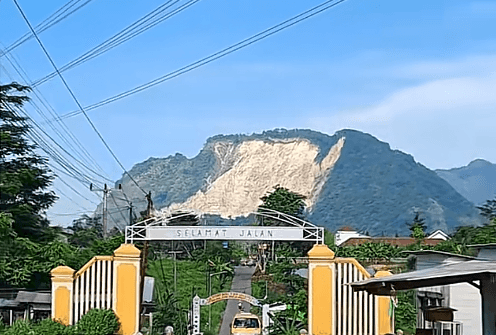
Introduction
Cikalahang village is a part of Dukupuntang district in Cirebon Regency. According to one of the members of BUMDES Lestari Jaya Desa Cikalahang, this village has approximately 6,900 resident. This village consists of 5 blocks of areas, making it one of the biggest villages in Cirebon. The majority of the people in this village work as a farmer, a merchant, a craftsman, and freshwater fish farmer. Not only that, this article also discussed the identity of this village is connected to its history and tourism that is still known by the community.
The origin History of Cikalahang
Long ago, the village of Cikalahang was a very dense forest. One day, a woman wanted to clear some land in that forest to build a home, but she couldn’t do it all by herself. She had to cut down some very large trees. So she thought about burning the forest down. However, the fire spread everywhere, even reaching the villages of Bobos and Dukupuntang. That is why the boundaries of Cikalahang Village are irregular. Once the land was completely cleared of trees, people began to settle there. Over time, more and more people moved in, until the area became bustling and was named Sudi Mampir Village, because so many people would stop by there.
Then, one day, an old man was selling oil in that village, but no one bought it. Eventually, he took the oil to Mandala Village to sell, but the result was the same. He thought about going back to Sudimampir Village to sell it, but the result was the same. He rested under a Malaka tree and ate a few Malaka fruits, but they tasted bitter, so he drank some well water near the tree. But the water tasted sweet. He thought about selling the water, so he poured out all his oil and replaced it with the well water. He immediately went around selling it in Sudimampir Village. In the end, the water sold well because the villagers were curious about it. However, the villagers complained that the water didn’t taste as sweet as the old man had claimed. They reported him to the village authorities. The next day, the old man was called to the village for a hearing.
During the hearing, the old man explained how and where he had gotten the water. Everyone laughed at the old man’s story. “Hahaha.” Because after eating malaka fruit and then drinking water, the water tastes sweet in your mouth, even though it isn’t actually sweet. Word of this spread far and wide. Eventually, people came to know the village of Sudi Mampir better by the name Cikalahang, which means Ci = cai (water) and Lahang = bland/tasteless.
Historical Artifact
The main historical artifact in Cikalahang Village is the Huludayeuh Inscription, locally known as Batu Tulis Huludayeuh. The name of this artifact is from the word “Hulu” means “head” or “center,” and “Dayeuh” means “city,” suggesting that the area was once a center or an important region. The artifact sits in Blok Huludayeuh, right in the middle of rice fields in Cikalahang Village, Dukupuntang District, Cirebon Regency. Local residents have known about this stone for a long time. The inscription is carved onto a natural boulder made of andesite rock. The stone stands roughly 75 centimeters tall, measures about 36 centimeters wide, and has a thickness of 20 centimeters. It features 11 lines of text written in Old Sundanese script and Old Sundanese language. This artifact tells about the kindness and efforts of Sri Baduga Maharaja or also known as Prabu Siliwangi in bringing prosperity to the people of the Kingdom of Sunda. The text describes the construction of irrigation canals and the development of the surrounding region. The condition of this artifact is fairly well maintained, guarded quite closely, with numerous protective measures such as a locked fence topped with barbed wire that runs along the entire perimeter. Today, the local government preserves the Huludayeuh Inscription as an official cultural heritage site (Cagar Budaya). A small protective shelter covers the stone to prevent further weather damage. The Huludayeuh Inscription serves as crucial physical proof of ancient Sundanese civilization and governance in the Cirebon region.

The second artifact from this village is Golok Mipih. Golok Mipih is a traditional weapon from West Java. The Member of BUMDES Lestari Jaya said that Golok Mipih was found in Situ Pajaten. The story behind it goes that long ago, the Situ Pajaten area used to be a training ground for an army of an ancient kingdom that used Golok Mipih as their weapon. But unfortunately, when I observed the Chikalahang Village on 26th October 2026, I couldn't find the artifact. So there’s no picture to display.
Tourism
Cikalahang Village has a recreational destination that you can visit. Such as Kolam Renang Hegar. Kolam Renang Hegar is a popular family water park fed directly by cool, chemical-free mountain springs. Surrounded by greenery, the complex features around ten different pools catering to both serious swimmers and families with young children.

Then there is Situ Pajaten. Situ Pajaten is a tranquil lake tucked in the southern part of the village, surrounded by dense trees and cool mountain breezes, where you can go fishing, riding a duck boat, or even just to have a picnic around the area. As one of the biggest tourist attractions of this village, Situ Pajaten is a must have when you visit this village.

Language and Local Economy
The daily life of the Cikalahang Village community reflects through its language use and local economic activities. The majority of residents speak Sundanese in their daily conversations and social interactions, because this village directly borders Majalengka and Kuningan who also use Sundanese as their language.
In terms of the local economy, agriculture, fisheries, craftsmanship, and the culinary sector form the backbone of the community's livelihood. Many residents work as farmers, from the interview with the members of BUMDES Jaya Lestari Cikalahang Village, he said that in this village they grew rice, corn, and melon from their agriculture. Other residents run freshwater fish farming businesses, raising carp, tilapia, and gourami. Additionally, several locals work as natural stone craftsmen for everyday essentials or tombstones. The product of their handicrafts goes nationally.


In the trade sector, residents capitalize on the village's tourism potential by opening culinary businesses, particularly grilled fish restaurants. The steady flow of tourists visiting Cikalahang's nature attractions gives local vendors the opportunity to market their fresh fish dishes directly to visitors.
Conclusion
Cikalahang Village stands out as a unique destination in Cirebon Regency where Sundanese heritage, historical folklore, and natural abundance come together. From the legendary origins of its name and the ancient Huludayeuh Inscription to the tranquil waters of Situ Pajaten and Kolam Renang Hegar, the village preserves its cultural identity while welcoming visitors. Supported by the hard work of its farmers, fish breeders, stone craftsmen, and local culinary entrepreneurs, Cikalahang continues to thrive as both a living historical site and a vibrant community-driven tourist destination.

